
Part 1: War has been in the background of my life for as long as I can remember.
I do not mean that I was always standing in the middle of it, but that it was always there somewhere in the distance, always on the screen, always in the language of the country, always moving through families, through neighborhoods, through young men trying to decide what kind of future they were stepping into. It was part of the atmosphere.
It definitely shaped the mood of entire decades in my life.
For a long time, I think I learned to live with that fact the way most people do, which is to say, at a distance. You hear about it enough and it starts to feel permanent. It starts to feel kinda like the weather. It also sadly starts to feel like something that is always happening somewhere else, to someone else, and because of that, you might let yourself go numb to it.
Part 2: How fragile peace really is, and how costly it becomes once lost.
As I have gotten older, I have been thinking more about creation, about order, about what it means that God did not make the world as an accident or leave it suspended in chaos.
If you have been following P R A Y E R S, you likely already know that the Catechism has become a new partner in my journey deeper into the faith. What I have been learning through it is that God does not simply make things appear out of nowhere, He gives them form, separates light from darkness, brings structure where there was none, establishes distinction, and creates a world that is ordered, purposeful, and good. Its been very enlightening.
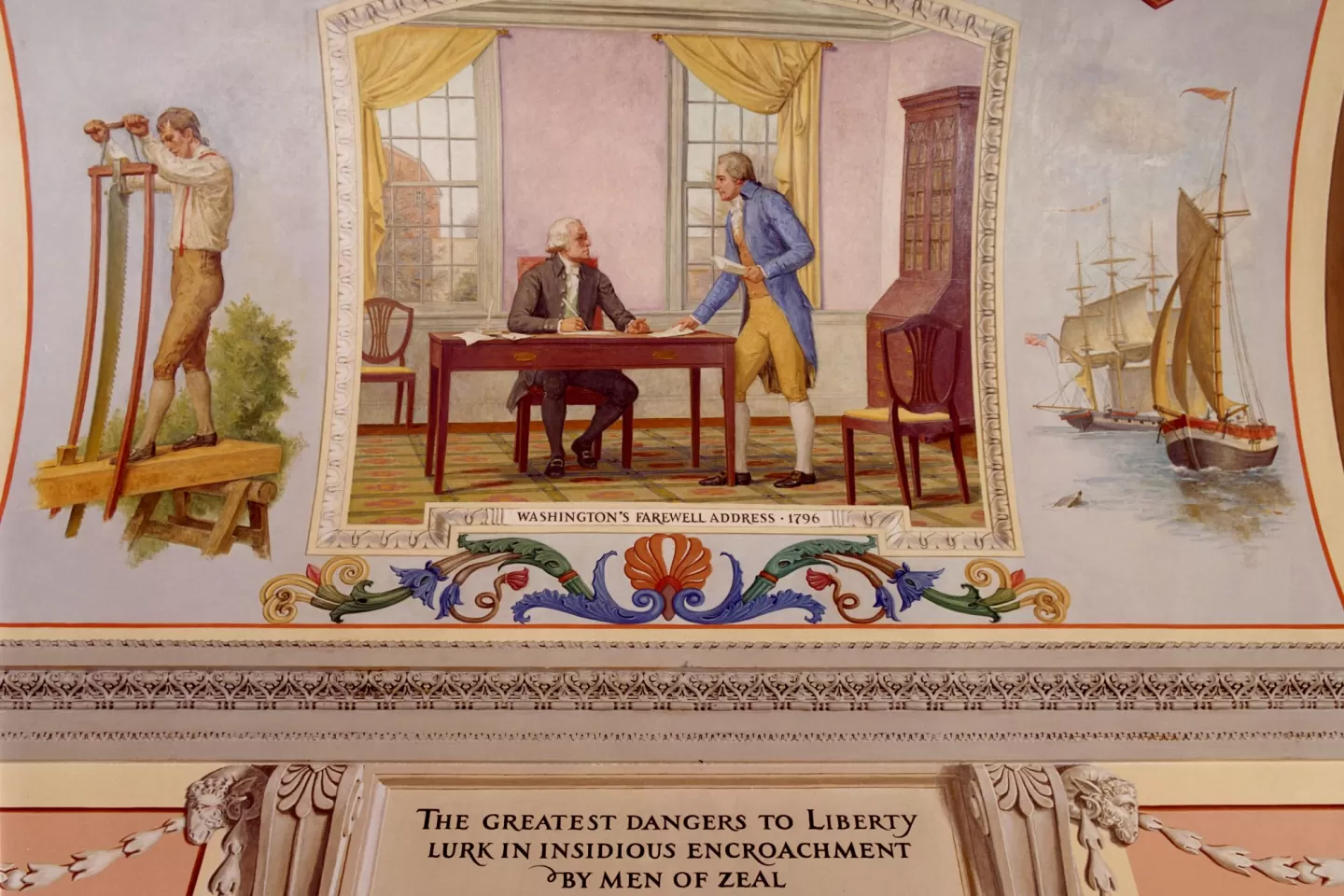
“Observe good faith and justice toward all nations. Cultivate peace and harmony with all.”
That matters to me because war always feels like an assault on that order. War does not just shatter buildings, borders, or bodies. As George Washington wisely urged, “Observe good faith and justice toward all nations. Cultivate peace and harmony with all,” true strength is not found in courting chaos, but in preventing it.
War fractures the sense that things belong where they should, blurs moral lines that should remain sharp, twists what was made for life toward death, and disorders families, memories, and men for years, sometimes for lifetimes.
If creation reveals God’s wisdom in rightly separating things, then war moves in the opposite direction, as a tearing, a smearing, and a collapse of form.
Part 3: When life stays in a state of moral blur for too long, does it eventually begin to erase itself?
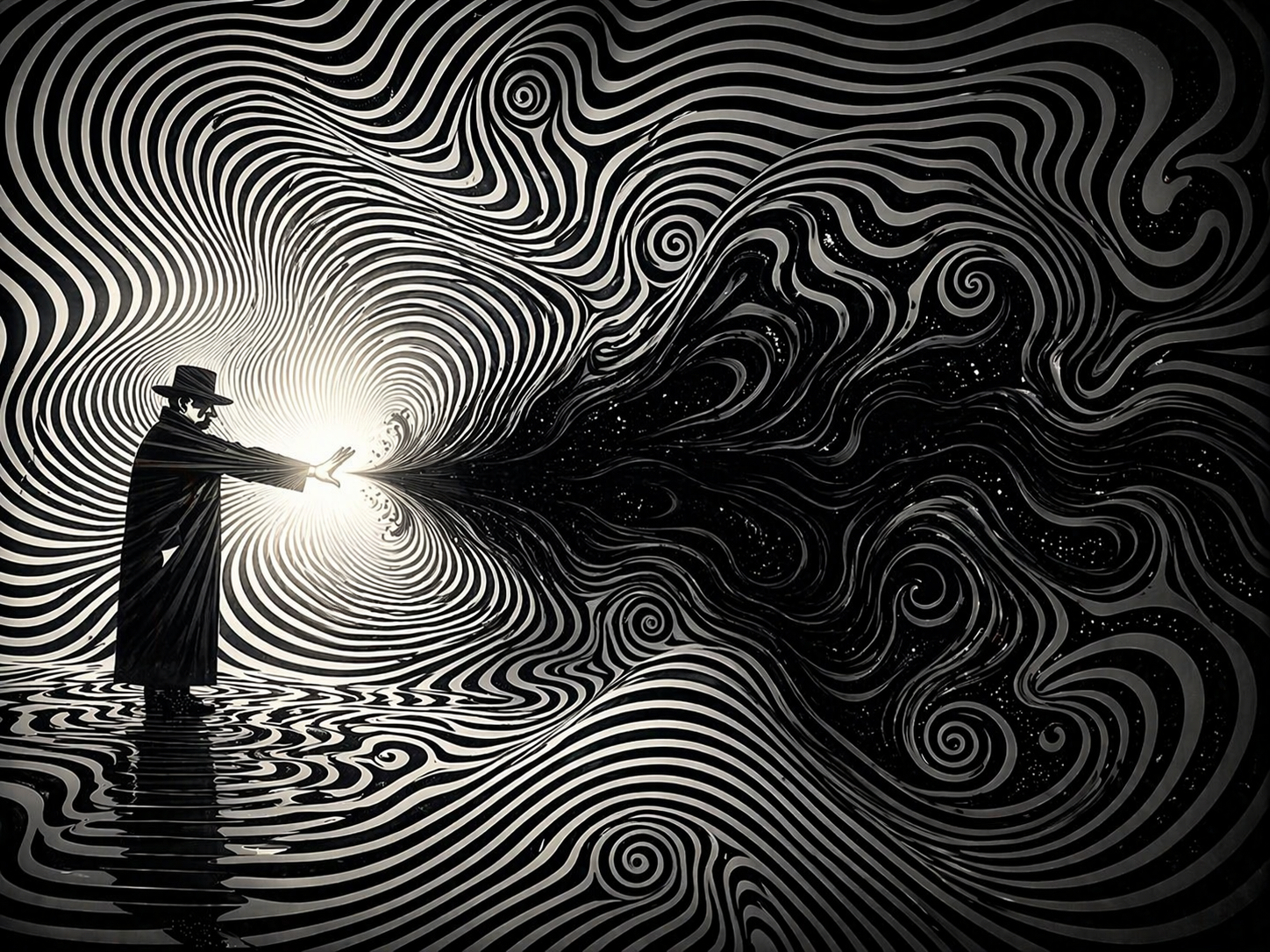
My brother has spent his later years battling demons that came back with him from his time overseas. I do not mean that poetically unfortunately. I mean there are things that follow a man home. There are shadows that do not stay where they should. There are memories that refuse to remain in the past. There are costs that do not show up all at once, and by the time they do, they have already moved into the structure of a person’s life.
Watching that definitely changes you. It removes the abstraction. It makes the whole thing feel less like history and more like proximity. And the truth is that it could have easily been me.
When I turned eighteen, there was a version of my life where I could have gone with him, entered that same fate, and let it take me wherever it was going to take me. I know how thin that red line was after 9/11, and how much a life can change because of one decision, one door you stepped through or did not.
I do not say that to be dramatic, only with gratefulness and gratitude, because it could have been me carrying some of that into my later years, trying to make peace with things that should never have had to be seen, and learning the hard lesson that some places do not fully release you even after you have left.
And it was not just him.
I knew many friends whose lives were shaped by that same gravity. Some came back quieter. Some came back harder and sadly some didn't come back. The ones that did come back, came with stories they did not know how to tell. Some like my brother came back and tried to move forward, but part of them remained elsewhere, in some interior terrain that never quite settled.
Even when people survive, not everything comes home intact. That is one of the hardest truths to admit. I like thinking in terms of safe and unsafe, present and absent, here and there. But some experiences refuse those boundaries. They follow people. They echo through marriages, through families, through years that were supposed to be calm.
Part 4. That truth becomes harder and more necessary in a world that grows used to destruction.
"The greatest kindness one can render to any man is leading him to truth." -St. Augustine
If creation is ordered, then the breaking of that order is not merely unfortunate. It wounds something real. Every creature reflects some aspect of God’s wisdom and goodness. The casual misuse of that life is never just strategic. It is moral.
Then I read a blurb on Pope Francis’s warning in 2013 that “the globalization of indifference has taken from us the ability to weep.” That line tracks because he is right indifference rarely arrives all at once, it settles in quietly. It becomes atmosphere.
There is something deeply modern about becoming desensitized and then mistaking that desensitization for intelligence, as if the more detached we become, the more clearly we see. I do not believe that is true maybe I did at one time to feel in control. I was never in control and thinking with clarity often comes from allowing yourself to feel the full weight of what is real without purposely running from it.
I want to remember, with humility, that my life could have gone another way, that my brother’s pain is not something I can ignore, that the friends I have known were not statistics, and that being spared one path should make me more responsible, not less.
If human beings are given stewardship, then leadership itself carries a burden before God. Power is not self justifying. Authority is not morally neutral. Decisions made far from the blast still fall upon real homes, real families, real bodies and real souls.
I think when I was younger and maybe even sadly a couple years ago. I had a greater tolerance for distance. I could hear about suffering and keep scrolling. I could let repetition numb me. Maybe that was self-protection. Maybe it was immaturity. Maybe a bit of both in fact it was likely the habit of growing up with too much of it always present.
In my later years, I find myself praying more. Why? Well I choose to pray for leaders with seriousness because their choices do in fact matter, and for the people caught beneath those choices because their suffering greatly matters too. So I pray because I know those decisions can ripple into generations of time and it cannot be easy for them to know how to handle a situation under distress. I choose to pray more for the people affected though because I no longer want to pretend that suffering happening somewhere else is somehow outside the reach of my concern. I guess what I am saying the world could really use people whose conscience is still alive, mine wasn't for most my life.
Sure the world is still wounded, but I want to meet it with prayer, with some moral clarity, and with the kind of reverence that remembers creation belongs first to God. And the refusal to believe that the proper response to a wounded world is a deadened heart.
“God said, ‘Let there be light’; and there was light. And God saw that the light was good; and God separated the light from the darkness.”